Eisenhower Matrix: Set Priorities & Plan Strategically
3,481 words • English • May 25, 2026
Mastering Your Time: Priority Setting and The Eisenhower Matrix for Strategic Focus
Did you know that a staggering 80% of the outcomes we achieve come from just 20% of our efforts? This is the essence of the Pareto Principle, often called the 80/20 rule, and it highlights a fundamental truth about productivity: not all tasks are created equal. In our fast-paced world, we’re constantly bombarded with demands, deadlines, and distractions. It’s easy to get caught in a whirlwind of activity, feeling busy but not necessarily productive. This is where the power of priority setting and the elegant simplicity of the Eisenhower Matrix come into play. By learning to distinguish between what’s truly urgent and what’s genuinely important, we can move beyond reactive firefighting and cultivate a more strategic, focused approach to our work and lives.
This isn’t just about ticking off to-do lists; it’s about making deliberate choices that align with our long-term goals. It’s about understanding that true productivity isn’t about doing more, but about doing more of what matters. Let’s dive into how we can transform our relationship with time, tasks, and our own potential.
The Tyranny of the Urgent: Why “Busy” Isn’t Always Productive
We’ve all been there. The phone rings incessantly, emails flood our inbox, colleagues pop by with “quick questions,” and a mountain of tasks seems to grow by the minute. In this state of constant urgency, it’s easy to feel overwhelmed and like we’re always playing catch-up. This is the “tyranny of the urgent” – a situation where tasks that demand immediate attention, regardless of their actual significance, hijack our time and energy.
Think about it: a ringing phone is inherently urgent. It demands an immediate response. An email notification is also designed to feel urgent. A colleague’s request, especially if delivered with a sense of immediate need, can also pull us away from our planned work. When we exclusively react to these urgent demands, we often find ourselves working on things that don’t necessarily contribute to our most important objectives. We might be exceptionally good at responding to crises, but are we making progress on the projects that will truly move the needle for our career, our business, or our personal growth?
The problem with living in a constant state of urgency is that it prevents us from engaging in activities that are important but not necessarily urgent. These are the tasks that involve planning, strategic thinking, relationship building, skill development, and proactive problem-solving. These are the activities that lead to long-term success and fulfillment, yet they are often the first to be sacrificed when the urgent demands pile up.
This reactive mode can lead to a cycle of stress, burnout, and a feeling of never quite getting ahead. We might feel like we’re constantly busy, but the progress we’re making feels superficial. It’s like running on a treadmill – you’re expending a lot of energy, but you’re not actually going anywhere new.
The Difference Between Clean and Truly Healing
Understanding the distinction between urgent and important is crucial, and it’s closely related to the difference between simply being “clean” and truly healing. In the context of recovery, for example, staying “clean” means abstaining from substance use. This is a vital and necessary step. However, true healing involves addressing the underlying issues, developing coping mechanisms, building a support system, and cultivating a life of purpose and fulfillment.
Similarly, in our daily lives, completing urgent tasks might keep us “clean” from immediate problems, but it doesn’t necessarily lead to “true healing” or growth in the broader sense. Strategic planning, skill development, and deep work are the equivalents of the deeper healing processes – they build resilience, competence, and long-term well-being.
Introducing the Eisenhower Matrix: A Framework for Clarity
Enter the Eisenhower Matrix, also known as the Urgent-Important Matrix. This powerful tool, attributed to former U.S. President Dwight D. Eisenhower, provides a simple yet profound framework for categorizing tasks and making informed decisions about how to allocate our time. Eisenhower himself was known for his ability to manage an incredibly demanding schedule, famously stating, “What is important is seldom urgent and what is urgent is seldom important.”
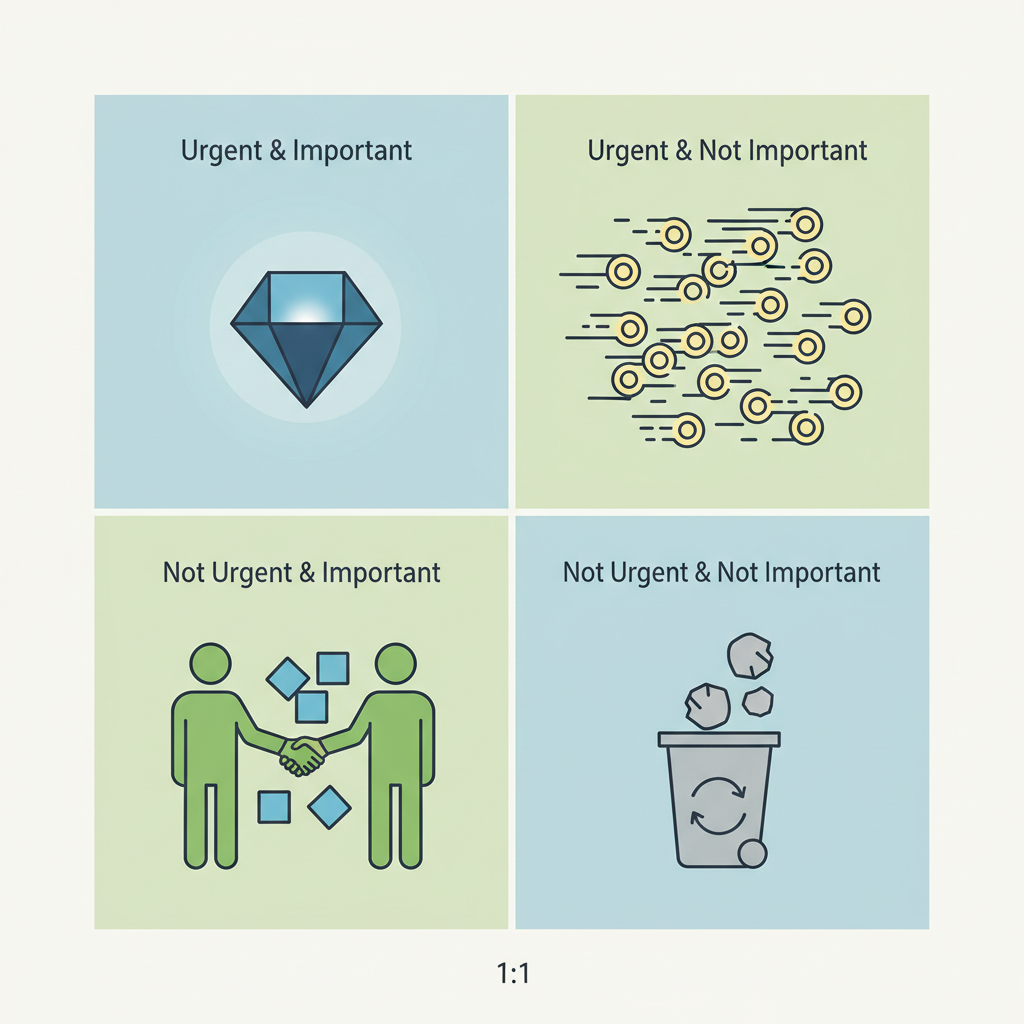
The matrix divides tasks into four distinct quadrants based on their urgency and importance:
- Quadrant 1: Urgent and Important
- Quadrant 2: Important but Not Urgent
- Quadrant 3: Urgent but Not Important
- Quadrant 4: Not Urgent and Not Important
By consciously placing each task into one of these quadrants, we gain immediate clarity on where our focus should lie. It helps us to stop treating everything as if it’s a crisis and instead allows us to prioritize what truly matters for our goals.
Defining Urgency and Importance
Before we dive deeper into the quadrants, it’s essential to understand the difference between urgency and importance:
- Urgency: This refers to tasks that require immediate attention. They often have deadlines, time constraints, or consequences if not addressed promptly. Urgent tasks are often reactive; they demand our attention now. Examples include responding to a critical client issue, meeting a project deadline, or dealing with an unexpected emergency.
- Importance: This refers to tasks that contribute to our long-term mission, values, and goals. They are about impact and effectiveness. Important tasks are proactive; they require planning and deliberate action to achieve significant outcomes. Examples include strategic planning, exercise, relationship building, learning new skills, and preventative maintenance.
The key insight of the Eisenhower Matrix is that most of what feels urgent is often not truly important in the grand scheme of things, and conversely, the tasks that are most important often lack immediate urgency, making them easy to postpone.
Navigating the Four Quadrants
Let’s break down each quadrant of the Eisenhower Matrix and explore how to approach the tasks within them.
Quadrant 1: Urgent and Important (Do First)
These are the crises, the pressing problems, the deadline-driven projects. They are critical and demand immediate action. Think of a major client complaint that needs immediate resolution, a critical system failure, or a deadline for a major project that is due today.
- Characteristics: Time-sensitive, high consequence, often reactive.
- Action: Do these tasks immediately. They are your top priorities. However, the goal of effective time management is to minimize the number of tasks that fall into this quadrant. If you are constantly living in Quadrant 1, it means you are likely not planning effectively and are allowing smaller issues to escalate into crises.
When tasks land here, it’s important to address them decisively. However, once you’ve managed the immediate situation, take time to reflect: “How could I have prevented this from becoming so urgent?” This reflection is key to moving tasks out of Quadrant 1 and into more manageable areas.
Quadrant 2: Important but Not Urgent (Schedule)
This is where strategic planning, growth, and long-term success happen. These tasks contribute significantly to your goals but don’t have an immediate deadline pressing down on them. This quadrant is the engine of personal and professional development. Examples include:
- Planning and strategic thinking
- Building relationships
- Exercise and health
- Learning and professional development
- Preventative maintenance (e.g., reviewing your budget, checking your car’s oil)
- Creative work and innovation
- Characteristics: Contributes to long-term goals, proactive, high impact.
- Action: Schedule these tasks. This is the quadrant where you want to spend the majority of your time. By proactively scheduling and dedicating time to these activities, you prevent them from becoming urgent crises in the future. This is where true progress is made. Learning to end the day clean, calm, and grateful often involves reflecting on the Quadrant 2 activities you accomplished.
Many people struggle to dedicate time to Quadrant 2 because there’s no immediate pressure. However, neglecting these tasks is a sure path to stagnation. Think of it as investing in your future self.
Quadrant 3: Urgent but Not Important (Delegate)
These tasks demand immediate attention but do not contribute to your core goals or long-term success. They are often distractions disguised as priorities. Think of interruptions, some emails, unnecessary meetings, or requests from others that don’t align with your objectives.
- Characteristics: Demands immediate attention, but low contribution to your goals, often driven by others’ priorities.
- Action: Delegate these tasks whenever possible. If delegation isn’t an option, try to minimize them, automate them, or politely decline them. These tasks often feel important because they are urgent, but they are a significant drain on your time and energy, pulling you away from Quadrant 1 and Quadrant 2 activities.
Learning to say “no” or “not now” to requests that fall into Quadrant 3 is a critical skill. It requires assertiveness and a clear understanding of your own priorities.
Quadrant 4: Not Urgent and Not Important (Eliminate)
These are time-wasters, distractions, and activities that provide little to no value. They are the digital rabbit holes, excessive social media scrolling, or tasks that are simply a drain on your energy.
- Characteristics: Little to no value, no contribution to goals, not time-sensitive.
- Action: Eliminate these tasks. Be ruthless in identifying and removing these activities from your life. They offer no benefit and actively detract from your ability to focus on what truly matters.
Spending time in Quadrant 4 is a luxury you cannot afford if you are serious about achieving your goals.
Strategic Planning and Focus: The Power of Quadrant 2
The real magic of the Eisenhower Matrix lies in its ability to highlight the importance of Quadrant 2. This is where proactive, strategic planning happens. Instead of being constantly pulled into the urgent demands of Quadrants 1 and 3, dedicating time to Quadrant 2 allows you to shape your future and prevent problems before they arise.
How to Increase Your Quadrant 2 Time
- Identify Your Core Goals: What are your most important long-term objectives? What do you want to achieve this year, this quarter, or even this month? Your Quadrant 2 tasks should directly support these goals.
- Schedule Dedicated Time: Block out specific times in your calendar for Quadrant 2 activities. Treat these appointments with yourself as seriously as you would a meeting with your most important client.
- Learn to Say No: Practice politely declining requests or commitments that don’t align with your priorities or that pull you away from your scheduled Quadrant 2 work. This is essential for protecting your time.
- Batch Similar Tasks: Group similar Quadrant 2 activities together to maximize efficiency. For example, dedicate a block of time for learning and professional development, or for strategic planning.
- Review and Adjust: Regularly review your schedule and your progress. Are you spending enough time in Quadrant 2? Are there Quadrant 3 tasks you can delegate or eliminate? Are Quadrant 1 crises becoming too frequent?
By consciously shifting your focus towards Quadrant 2, you move from a reactive mode to a proactive one. You start to control your agenda rather than letting your agenda control you. This shift is fundamental to achieving sustainable success and reducing stress.
The Role of Focus in Strategic Planning
Focus is the essential ingredient that allows you to effectively engage with Quadrant 2 activities. In today’s hyper-connected world, distractions are everywhere, making deep focus a rare and valuable commodity. Strategic planning requires sustained, uninterrupted concentration.
When you are focused, you can:
- Think critically: Analyze complex problems and develop innovative solutions.
- Plan effectively: Create detailed strategies and roadmaps for achieving your goals.
- Learn deeply: Absorb new information and develop new skills more efficiently.
- Create high-quality work: Produce outputs that are thorough, well-considered, and impactful.
Without focus, even well-intentioned planning can become superficial. The Eisenhower Matrix helps identify what to focus on, but developing the ability to maintain that focus is a separate, though equally crucial, skill.
Practical Application: Using the Matrix in Daily Life
Let’s walk through a practical example of how to apply the Eisenhower Matrix. Imagine you’re starting your day. You open your task list and your inbox.
- Review Your Tasks: Go through each item.
- Categorize: For each task, ask:
Is it Urgent? (Does it need immediate attention?) Is it Important? (Does it contribute to my long-term goals?)
- Assign to Quadrant:
Urgent & Important: “Client X’s critical bug report needs immediate attention before their system goes down.” -> Quadrant 1. DO. Important & Not Urgent: “Research and outline Q3 marketing strategy.” -> Quadrant 2. SCHEDULE. Urgent & Not Important: “Respond to colleague Y’s instant message asking for a minor detail already in the shared document.” -> Quadrant 3. DELEGATE/MINIMIZE. Not Urgent & Not Important: “Browse social media for an hour.” -> Quadrant 4. ELIMINATE.
By doing this quick assessment, you can immediately see that the client bug report is your top priority for now. The marketing strategy needs to be blocked out on your calendar for later today or tomorrow. The colleague’s message should be handled briefly or delegated if possible. Social media browsing needs to be cut out.
This daily practice helps you gain control over your day and ensures that your efforts are aligned with your most important objectives. It’s a continuous process of assessment and adjustment.
Overcoming Challenges and Maintaining Momentum
Applying the Eisenhower Matrix isn’t always easy. We face common obstacles:
- The Allure of Urgency: It’s tempting to get swept up in urgent tasks, even if they aren’t important. This often stems from a desire to please others or avoid perceived conflict.
- Difficulty Saying No: Many find it hard to decline requests, leading to overcommitment.
- Procrastination on Quadrant 2: Important but not urgent tasks can be easily put off because there’s no immediate consequence.
- Blurred Lines: Sometimes, the distinction between urgent and important isn’t clear-cut.
To overcome these challenges:
- Practice Assertiveness: Learn to communicate your priorities clearly and politely decline requests that don’t align.
- Build Habits: Create routines for Quadrant 2 activities. Make them non-negotiable parts of your schedule.
- Seek Support: Talk to your manager or team about workload and priorities. Sometimes, re-aligning expectations is necessary. Consider resources on how to handle loneliness in recovery, as building a strong support system is key to navigating these challenges. 23 how to handle loneliness in recovery can offer insights.
- Regular Review: Make time for weekly or monthly reviews of your tasks and priorities. This helps you stay on track and make necessary adjustments.
Remembering the goal of true healing and growth, as opposed to just staying “clean” from immediate problems, can be a powerful motivator.
Furthermore, cultivating strong confidence standards and self-respect is crucial. When you value your own time and goals, it becomes easier to protect them from external demands that don’t serve you. Confidence standards and self respect is a related area that supports effective priority setting.
The Long-Term Benefits of Strategic Prioritization
Consistently applying the Eisenhower Matrix and prioritizing Quadrant 2 activities yields significant long-term benefits:
- Reduced Stress: By proactively managing your workload and avoiding constant firefighting, you’ll experience less stress and overwhelm.
- Increased Productivity: You’ll be doing more of what truly matters, leading to greater accomplishments and a stronger sense of purpose.
- Improved Decision-Making: The framework helps you make conscious, goal-aligned choices about how you spend your time.
- Greater Control: You’ll feel more in control of your schedule and your life, rather than being a victim of circumstances.
- Enhanced Goal Achievement: By focusing on important, long-term tasks, you’ll make consistent progress towards your most significant goals.
- Personal Growth: Dedicating time to learning, skill development, and relationship building fosters continuous personal and professional growth.
This approach is not just about managing tasks; it’s about designing a life that aligns with your values and aspirations. It’s about moving from a state of simply reacting to the world to one where you are actively shaping your future. For those in recovery, maintaining this structured approach can be a cornerstone of sustained well-being. Learning how to manage your time effectively can be a vital part of 23 how to handle loneliness in recovery 2 and 23 how to handle loneliness in recovery 3.
Conclusion: Take Control of Your Time, Take Control of Your Life
The Eisenhower Matrix provides a powerful, yet simple, lens through which to view our tasks and responsibilities. By understanding the difference between urgent and important, we can move beyond the chaos of constant reactivity and cultivate a more strategic, focused, and fulfilling approach to our work and lives. Prioritizing Quadrant 2 – the realm of important but not urgent tasks – is the key to long-term success, growth, and well-being.
It requires conscious effort, discipline, and a willingness to say “no” to distractions. But the rewards – reduced stress, increased productivity, and a greater sense of control – are immeasurable. Start today by assessing your current tasks, categorizing them using the matrix, and making a commitment to dedicate more time to what truly matters. You have the power to design your days and, in doing so, to shape your future. Remember that consistent effort, even in small steps, leads to significant progress over time. Even when facing challenges like loneliness, effective time management can provide a sense of structure and purpose. 23 how to handle loneliness in recovery 4 offers further guidance on navigating such difficulties.
Frequently Asked Questions
What is the Eisenhower Matrix?
The Eisenhower Matrix, also known as the Urgent-Important Matrix, is a time management tool that helps individuals prioritize tasks by categorizing them into four quadrants based on their urgency and importance. It was popularized by Dwight D. Eisenhower and is based on his quote, “What is important is seldom urgent and what is urgent is seldom important.”
How do I distinguish between urgent and important tasks?
Urgent tasks demand immediate attention, often with deadlines or time constraints. They are typically reactive. Important tasks contribute to your long-term goals, values, and mission. They are proactive and focus on impact and effectiveness. For example, a client crisis is urgent and important, while planning your long-term career development is important but not urgent.
Which quadrant should I spend the most time on?
You should aim to spend the majority of your time in Quadrant 2: Important but Not Urgent. This quadrant is where strategic planning, growth, relationship building, and preventative measures occur. By investing time here, you proactively work towards your goals and prevent tasks from becoming urgent crises.
What should I do with tasks in Quadrant 3 (Urgent but Not Important)?
Tasks in Quadrant 3 demand immediate attention but do not contribute significantly to your long-term goals. These are often distractions or tasks driven by others’ priorities. The best approach is to delegate them if possible. If delegation isn’t an option, try to minimize them, automate them, or politely decline.
How can the Eisenhower Matrix help reduce stress?
By helping you differentiate between what truly matters and what is merely urgent, the Eisenhower Matrix allows you to focus your energy on high-impact activities. This reduces the feeling of being overwhelmed by constant demands and minimizes the stress associated with reactive firefighting, leading to a greater sense of control and accomplishment.
Is the Eisenhower Matrix useful for personal life as well as work?
Absolutely. The principles of the Eisenhower Matrix are universally applicable. You can use it to prioritize personal goals, health and fitness activities, family time, learning, and hobbies, ensuring that these important aspects of your life receive the attention they deserve, rather than being overshadowed by less critical demands.
Key Takeaways
- Urgent vs. Important: Recognize that urgent tasks demand immediate attention, while important tasks contribute to long-term goals.
- The Eisenhower Matrix: A four-quadrant tool categorizing tasks as Urgent/Important, Important/Not Urgent, Urgent/Not Important, or Not Urgent/Not Important.
- Quadrant 1 (Do First): Urgent and Important tasks require immediate action. Aim to minimize these through better planning.
- Quadrant 2 (Schedule): Important but Not Urgent tasks are crucial for long-term success. Dedicate the most time to these by scheduling them.
- Quadrant 3 (Delegate): Urgent but Not Important tasks should be delegated, minimized, or declined.
- Quadrant 4 (Eliminate): Not Urgent and Not Important tasks are time-wasters and should be eliminated.
- Strategic Planning: Focus on Quadrant 2 to proactively work towards your goals and prevent future crises.
- Focus is Key: Sustained concentration is essential for effective strategic planning and execution.
- Benefits: Reduced stress, increased productivity, better decision-making, and greater goal achievement.
This opinions posed in this article ae just that, mine. This article is for informational purposes only.