Develop a Growth Mindset: Embrace Challenges & Learning 2026
3,746 words • English • May 25, 2026
Developing a Growth Mindset: Embracing Challenges, Effort-Based Belief, and Continuous Learning
Did you know that a staggering 80% of people believe that their intelligence and talents are fixed traits, unchangeable throughout life? This statistic, often cited in discussions about mindset, highlights a widespread misconception that can significantly limit our potential. In stark contrast, a growth mindset—the belief that our abilities and intelligence can be developed through dedication and hard work—opens doors to incredible personal and professional growth. It’s not just about being smart; it’s about how we approach learning, challenges, and setbacks. In 2026, the importance of adaptability and continuous learning has never been more pronounced. Whether you’re navigating a demanding career, striving for personal goals, or simply seeking to understand yourself better, cultivating a growth mindset is a powerful tool.
For many of us, the journey to developing this mindset isn’t always straightforward. We might have grown up in environments that emphasized innate talent, or perhaps past experiences have taught us to fear failure. But the good news is that a growth mindset isn’t something you’re born with or without; it’s a skill that can be learned and strengthened. It’s about shifting our perspective from “I can’t do this” to “I can’t do this yet.” This subtle but profound difference can be the catalyst for unlocking new levels of achievement and fulfillment.
In this article, we’ll dive deep into the core components of a growth mindset: embracing challenges, understanding the power of effort-based belief, and committing to continuous learning. We’ll explore practical strategies to help you identify and reframe fixed mindset thoughts, celebrate your progress, and build resilience in the face of adversity. Get ready to transform how you think about your capabilities and unlock your true potential.
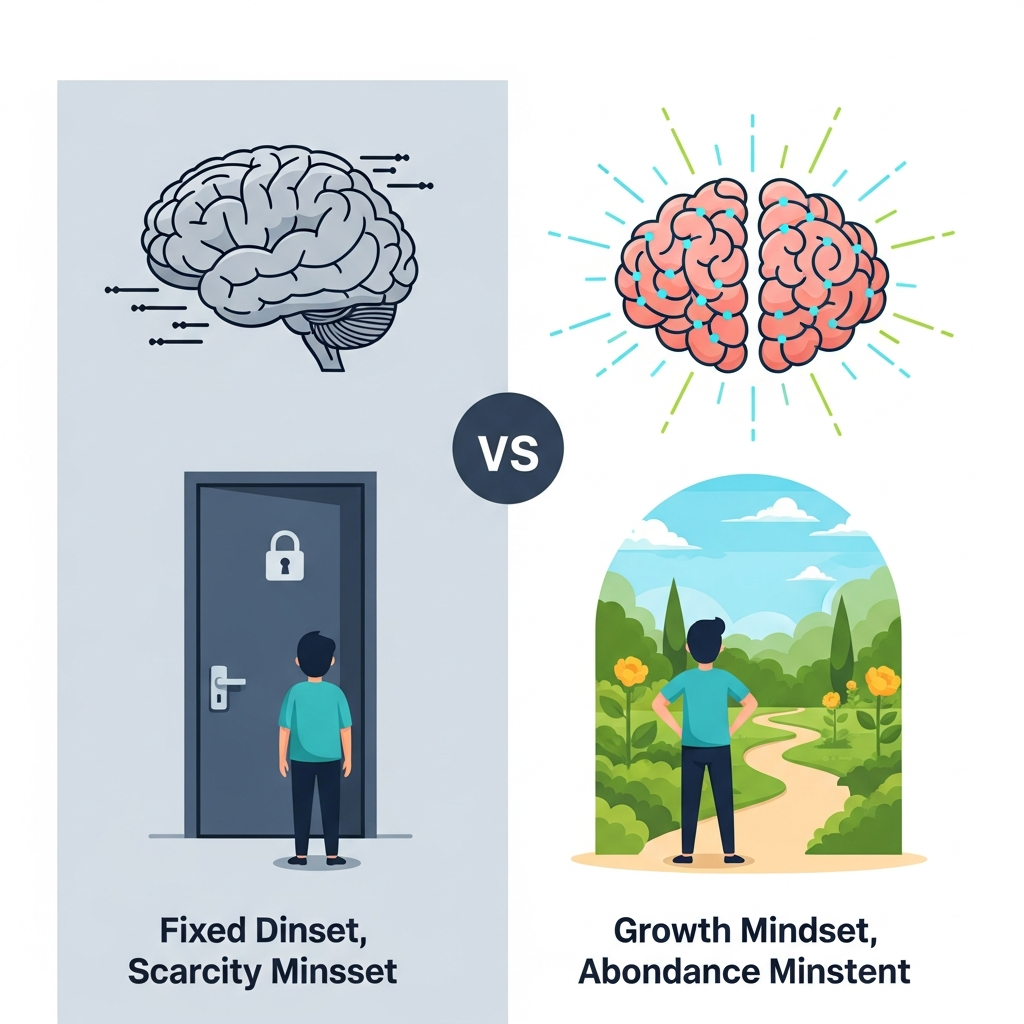
The Two Mindsets: Fixed vs. Growth
Before we can cultivate a growth mindset, it’s crucial to understand the fundamental differences between it and its counterpart, the fixed mindset. Dr. Carol Dweck, a renowned Stanford psychologist, pioneered much of the research in this area. Her work distinguishes between these two fundamental beliefs about our abilities.
The Fixed Mindset: Believing Abilities Are Innate
Individuals with a fixed mindset believe that their basic qualities, like intelligence, talent, and personality, are fixed traits. They see themselves as having a certain amount of intelligence or talent, and that’s that. This belief system often leads to a preoccupation with proving oneself.
- Fear of Failure: If your abilities are fixed, failure is perceived as a direct reflection of your inherent lack of talent or intelligence. This can lead to avoiding challenges altogether, as the risk of failing and appearing inadequate is too high.
- Avoidance of Challenges: Why would you attempt something you might not be good at? A fixed mindset encourages sticking to what you know and what you’re already good at, rather than venturing into the unknown.
- Seeing Effort as Futile: In a fixed mindset, effort is often seen as a sign of weakness. If you were truly intelligent or talented, things would come easily. Struggling with a task implies you don’t have what it takes.
- Ignoring Useful Feedback: Negative feedback can feel like a personal attack on one’s core abilities. Those with a fixed mindset may become defensive, dismissive, or even resentful of criticism, rather than using it as an opportunity for improvement.
- Feeling Threatened by the Success of Others: The achievements of others can be perceived as a benchmark against which their own fixed abilities are measured. If someone else excels, it might feel like it diminishes their own standing or highlights their limitations.
The Growth Mindset: Believing Abilities Can Be Developed
In contrast, individuals with a growth mindset believe that their most basic abilities can be developed through dedication and hard work. This belief creates a love of learning and a resilience that is essential for great accomplishment.
- Embracing Challenges: Challenges are seen not as threats, but as opportunities to learn and grow. They are viewed as a natural part of the learning process.
- Persistence in the Face of Setbacks: Setbacks are not seen as evidence of inadequacy, but as opportunities to learn and improve. Effort is viewed as the path to mastery.
- Seeing Effort as the Path to Mastery: Effort is understood as crucial for developing abilities. The harder you work, the more you learn and the stronger your skills become.
- Learning from Criticism: Feedback, even negative feedback, is welcomed as valuable information that can help in the process of learning and improvement. It’s seen as a guide, not a judgment.
- Finding Lessons and Inspiration in the Success of Others: The achievements of others are seen as inspiration and evidence of what is possible through dedication and hard work. They can provide valuable insights and motivation.
Understanding these distinctions is the first step. Now, let’s explore how to actively cultivate a growth mindset in our own lives.
Embracing Challenges: Stepping Outside Your Comfort Zone
One of the most defining characteristics of a growth mindset is the willingness to embrace challenges. For someone with a fixed mindset, a difficult task can feel like a looming threat, a potential exposure of their limitations. For someone with a growth mindset, it’s an exciting opportunity.
Think about learning to ride a bike. As a child, you probably fell off many times. Each fall was a challenge. A fixed mindset might have led you to declare, “I’m just not a bike rider,” and give up. But a growth mindset encourages you to think, “Okay, that hurt, but I can try again. Maybe I need to adjust my balance or pedal differently.” You get back on, try again, and eventually, you learn to ride.
In adulthood, these challenges can manifest in many forms: taking on a new project at work, learning a new skill, or even navigating complex personal relationships.
Practical Strategies for Embracing Challenges:
- Reframe “Difficult” as “Learning Opportunity”: When faced with a task that seems daunting, consciously rephrase your internal dialogue. Instead of thinking, “This is too hard, I’ll never be able to do it,” try “This is challenging, and I’m going to learn a lot by trying.”
- Start Small: You don’t have to leap into the most intimidating challenges immediately. Begin by taking on tasks that are slightly outside your comfort zone. Successfully navigating these smaller hurdles builds confidence and makes bigger challenges seem less daunting.
- Focus on the Process, Not Just the Outcome: While the end result is important, a growth mindset emphasizes the value of the journey. Celebrate the effort you put in, the strategies you try, and the lessons you learn along the way, regardless of immediate success. This aligns with the principle of progress not perfection learning to grow without beating yourself up.
- Seek Out New Experiences: Actively look for opportunities that will stretch your abilities. This could be joining a new club, taking a class in a subject you know nothing about, or volunteering for a role that requires new skills.
- Visualize Success (and the Journey): Imagine yourself successfully navigating the challenge, but also visualize yourself working through the difficulties. This mental preparation can make the actual experience feel more manageable.
Embracing challenges is about understanding that growth happens at the edges of our capabilities. It’s about recognizing that not trying is the biggest failure, not the act of trying and encountering obstacles. This willingness to step into the unknown is fundamental to personal development.
The Power of Effort-Based Belief: Effort as the Engine of Growth
Perhaps the most misunderstood aspect of a growth mindset is the role of effort. For those with a fixed mindset, effort can be seen as a sign that you lack natural talent. If you were truly gifted, things would be easy. This couldn’t be further from the truth.
A growth mindset views effort as the engine of growth. It’s the fuel that powers the development of abilities and intelligence. Think of a professional athlete. Do they succeed solely because of innate talent? Absolutely not. Their success is a testament to countless hours of dedicated practice, pushing their bodies and minds beyond their perceived limits.
Why Effort Matters:
- Neuroplasticity: Our brains are not static. They are constantly rewiring themselves based on our experiences and learning. Effortful engagement, especially when it involves struggle and problem-solving, literally builds new neural pathways and strengthens existing ones. This is the biological basis for growth.
- Skill Development: No one is born an expert coder, a masterful chef, or a fluent speaker of a new language. These skills are acquired through consistent, deliberate practice and effort.
- Resilience Building: When you believe effort leads to improvement, you’re more likely to persevere through difficulties. Each challenge overcome through effort reinforces the belief that you can develop your abilities.
- Deeper Understanding: Pushing through a difficult concept or task often leads to a more profound and lasting understanding than if the information were simply absorbed passively.
Cultivating Effort-Based Belief:
- Acknowledge and Value Effort: Make a conscious effort to recognize and praise effort in yourself and others, not just outcomes. When you complete a challenging task, acknowledge the hard work you put in.
- Learn from Mistakes (and the Effort Involved): When you make a mistake, analyze the effort you put in and what you learned from the experience. Instead of dwelling on the error, focus on how you can apply what you learned to future efforts. This is a key part of learning to grow without shame in recovery.
- Set Process-Oriented Goals: Instead of solely focusing on the final result (e.g., “I want to get an A”), set goals related to the effort you’ll put in (e.g., “I will spend two hours studying each day,” or “I will try three different approaches to solve this problem”).
- Understand That Struggle is Normal: Recognize that struggle is not a sign of failure, but a sign that you are learning and growing. It’s a natural and necessary part of the process.
- Connect Effort to Progress: Keep a journal or log where you track your efforts and the progress you make, no matter how small. Seeing the tangible results of your hard work can be incredibly motivating.
Believing in the power of effort is about understanding that talent is only the starting point. It’s the consistent application of effort, fueled by a belief in one’s capacity to grow, that leads to mastery and significant achievement.
Continuous Learning: The Lifelong Journey of Growth
In our rapidly evolving world, the ability to learn continuously is no longer a desirable trait; it’s a necessity. A growth mindset is intrinsically linked to a commitment to lifelong learning. It’s about approaching knowledge and skills not as destinations, but as ongoing journeys.
Consider the pace of technological advancement. Skills that were cutting-edge five years ago might be obsolete today. To thrive, we must be willing to constantly update our knowledge, acquire new skills, and adapt to changing circumstances. A growth mindset provides the foundation for this adaptability.
Why Continuous Learning is Essential:
- Adaptability in a Changing World: As mentioned, the world is constantly changing. Continuous learning allows us to stay relevant and adaptable in our careers and personal lives.
- Personal Enrichment: Learning new things can be incredibly fulfilling. It broadens our perspectives, sparks creativity, and can lead to new hobbies and passions.
- Problem-Solving: The more we learn, the more tools and perspectives we have at our disposal to tackle complex problems.
- Cognitive Health: Engaging in learning activities throughout life is associated with better cognitive function and can help maintain brain health as we age.
- Innovation and Creativity: Continuous exposure to new ideas and information fuels creativity and the ability to innovate.
Strategies for Fostering Continuous Learning:
- Cultivate Curiosity: Approach the world with a sense of wonder. Ask questions, seek out new information, and be open to exploring topics that pique your interest, even if they seem unrelated to your current work or life.
- Read Widely: Make reading a habit. Explore books, articles, and online resources on a variety of subjects. This is one of the most accessible ways to engage in continuous learning.
- Take Courses and Workshops: Whether online or in-person, formal learning opportunities can provide structured knowledge and new skills. Many platforms offer free or low-cost courses on virtually any topic.
- Seek Mentorship and Learn from Others: Find people who are knowledgeable in areas you want to learn about and seek their guidance. Learning from the experiences and insights of others is a powerful form of continuous education. This can be particularly helpful when you’re feeling lost or unsure how to proceed. For instance, learning how to handle loneliness in recovery often involves seeking guidance from those who have navigated similar experiences.
- Reflect on Your Learning: Regularly take time to reflect on what you’ve learned. How can you apply it? What questions does it raise? This active processing deepens understanding and retention.
- Embrace the “Beginner’s Mind”: Approach new subjects with the humility and openness of a beginner, even if you have prior knowledge. This mindset allows you to absorb information without the baggage of preconceived notions.
- Be Patient with Yourself: Learning takes time. There will be moments of frustration and confusion. Remember that this is part of the process. Your ability to keep going, to persist, is a testament to your growth mindset. You are why still standing is more than a phrase – your resilience in the face of learning curves is a powerful indicator of your commitment to growth.
Continuous learning isn’t just about acquiring new information; it’s about developing a mindset that embraces the unknown and sees every experience as a potential lesson. It’s about understanding that the journey of learning never truly ends.
Overcoming Obstacles: Dealing with Setbacks and Failure
Even with a well-developed growth mindset, setbacks and failures are inevitable. The difference lies in how we respond to them. For someone with a fixed mindset, failure can be devastating, leading to discouragement and a retreat from challenges. For someone with a growth mindset, failure is a temporary detour, a valuable source of information, and an opportunity to learn and adjust.
Reframing Failure:
- Failure as Feedback: Instead of seeing failure as a judgment on your abilities, view it as feedback. What went wrong? What can you learn from this experience? This is a crucial aspect of building confidence standards and self respect.
- Failure as a Stepping Stone: Many successful people attribute their success to a series of failures that taught them crucial lessons. Thomas Edison famously said, “I have not failed. I’ve just found 10,000 ways that won’t work.”
- Failure as a Catalyst for Change: Sometimes, a failure forces us to re-evaluate our approach, our goals, or our strategies. This can lead to positive changes we might not have made otherwise.
Strategies for Navigating Setbacks:
- Acknowledge Your Feelings: It’s okay to feel disappointed, frustrated, or sad when you experience a setback. Allow yourself to feel these emotions without letting them define you.
- Analyze What Happened (Objectively): Once the initial emotions subside, try to analyze the situation objectively. What factors contributed to the setback? What could you have done differently?
- Focus on What You Can Control: You can’t change the past, but you can influence the future. Focus your energy on the actions you can take now to move forward.
- Seek Support: Talk to trusted friends, family members, mentors, or a therapist. Sharing your experience can provide perspective and emotional support. In situations of personal struggle, understanding how to handle loneliness in recovery 2 can be crucial for navigating these difficult times.
- Adjust Your Strategy: Based on what you’ve learned, adjust your approach. This might mean trying a different method, seeking more information, or breaking down the task into smaller, more manageable steps.
- Celebrate Small Wins: Even after a setback, acknowledge any progress you’ve made or any lessons you’ve learned. These small victories can help rebuild momentum and confidence. Remembering why still standing is more than a phrase 2 can be a powerful reminder of your inner strength.
Resilience is not about avoiding failure; it’s about bouncing back from it stronger and wiser. By reframing setbacks as learning opportunities and focusing on continuous improvement, you can transform obstacles into stepping stones.
Practical Application: Integrating Growth Mindset into Daily Life
Developing a growth mindset isn’t a one-time event; it’s an ongoing practice. It requires conscious effort and consistent application in various aspects of your life.
In Your Career:
- Seek challenging projects: Volunteer for tasks that stretch your skills and knowledge.
- Ask for constructive feedback: Actively solicit feedback from colleagues and supervisors, and view it as a tool for improvement.
- Embrace new technologies and methodologies: Stay current with developments in your field and be willing to learn new tools.
- View mistakes as learning opportunities: If a project doesn’t go as planned, analyze what happened and how you can do better next time.
In Your Relationships:
- Listen actively and empathetically: Seek to understand others’ perspectives, even when they differ from your own.
- Communicate openly about your needs and feelings: Be willing to express yourself and work through challenges collaboratively.
- View relationship struggles as opportunities for growth: Difficulties in relationships can be powerful catalysts for learning about yourself and how to connect better with others.
- Be open to feedback from loved ones: Constructive criticism from those close to you can be invaluable for personal development.
In Your Personal Development:
- Set learning goals: Identify skills or knowledge you want to acquire and create a plan to achieve them.
- Step outside your comfort zone regularly: Try new activities, hobbies, or experiences that challenge you.
- Practice self-compassion: Be kind to yourself, especially during difficult times. Remember that making mistakes is part of being human and learning. This is a vital aspect of learning to grow without shame in recovery.
- Reflect on your progress: Regularly review your efforts and achievements, acknowledging how far you’ve come.
By consciously applying these principles, you can weave the growth mindset into the fabric of your daily life, transforming challenges into opportunities and setbacks into stepping stones.
Frequently Asked Questions About Growth Mindset
What exactly is a growth mindset?
A growth mindset is the belief that your basic abilities, such as intelligence and talent, can be developed through dedication, hard work, and learning. It’s the understanding that your potential is not fixed but can be cultivated.
How can I tell if I have a fixed mindset?
Signs of a fixed mindset include avoiding challenges, giving up easily when faced with obstacles, seeing effort as pointless, ignoring useful feedback, and feeling threatened by the success of others. If these behaviors resonate with you, you might be leaning towards a fixed mindset.
Is it possible to change from a fixed mindset to a growth mindset?
Absolutely! A growth mindset is not an innate trait but a learned perspective. By consciously recognizing fixed mindset thoughts and actively choosing growth-oriented responses, you can cultivate a growth mindset over time. It’s a journey, not an overnight transformation.
What is the role of failure in developing a growth mindset?
Failure is a crucial part of the growth mindset journey. Instead of viewing failure as a sign of inadequacy, a growth mindset sees it as valuable feedback, an opportunity to learn, and a chance to adjust strategies. It’s a stepping stone, not a dead end.
How can I encourage a growth mindset in children or students?
Encourage effort and learning over innate talent. Praise their hard work, their strategies, and their persistence. Frame challenges as opportunities to learn, and help them see mistakes as learning experiences. Avoid labeling children as “smart” or “talented” and instead focus on their efforts and progress.
Can a growth mindset help with stress and anxiety?
Yes, a growth mindset can significantly help manage stress and anxiety. By believing that challenges can be overcome through effort and learning, individuals are often better equipped to handle stressful situations. They tend to see problems as solvable rather than insurmountable, which can reduce feelings of helplessness and anxiety. This is particularly relevant when discussing how to handle loneliness in recovery 3, where a proactive, growth-oriented approach can foster resilience.
Conclusion: Embracing Your Potential
Developing a growth mindset is one of the most empowering journeys you can embark on. It’s about recognizing that your capabilities are not predetermined but are fluid and expandable. By embracing challenges, valuing the power of effort, and committing to continuous learning, you unlock your potential for growth, resilience, and fulfillment.
The shift from a fixed to a growth mindset is not always easy. It requires self-awareness, conscious effort, and a willingness to challenge your own ingrained beliefs. There will be moments of doubt, and setbacks will occur. But by consistently practicing these principles, you can rewire your brain to approach life with a powerful belief in your ability to learn, adapt, and achieve.
Remember, the journey of growth is lifelong. Each challenge you overcome, each effort you invest, and each new piece of knowledge you acquire strengthens your growth mindset and propels you forward. Embrace the process, celebrate your progress, and never underestimate the incredible potential that lies within you, waiting to be cultivated. The world in 2026 is filled with opportunities for those who believe they can learn and grow.
Key Takeaways
- A growth mindset is the belief that abilities can be developed through dedication and hard work, contrasting with a fixed mindset where abilities are seen as innate.
- Embracing challenges is crucial; they are viewed as opportunities for learning and growth, not as threats.
- Effort is the engine of growth; it builds new neural pathways, develops skills, and fosters resilience.
- Continuous learning is essential for adaptability in a rapidly changing world and for personal enrichment.
- Setbacks and failures are reframed as valuable feedback and learning opportunities, not as definitive judgments.
- Integrating a growth mindset into daily life involves conscious application in career, relationships, and personal development.
- Cultivating a growth mindset is an ongoing practice that leads to greater resilience, achievement, and fulfillment.
This opinions posed in this article ae just that, mine. This article is for informational purposes only.