Craft SMART & Meaningful Goals for 2026
3,838 words • English • May 25, 2026
Crafting SMART and Meaningful Goals: Your Blueprint for Success in 2026
Did you know that only about 9% of people successfully achieve their New Year’s resolutions? That staggering statistic, often cited around the turn of the year, highlights a common struggle: setting goals that are not just ambitious, but achievable and meaningful. We all have dreams and aspirations, but translating those into concrete actions can feel like navigating a maze in the dark. This is where the power of well-crafted goals comes into play. By focusing on specificity, measurability, alignment with our core values, and understanding our motivation, we can transform vague desires into actionable plans that lead to genuine progress and lasting fulfillment.
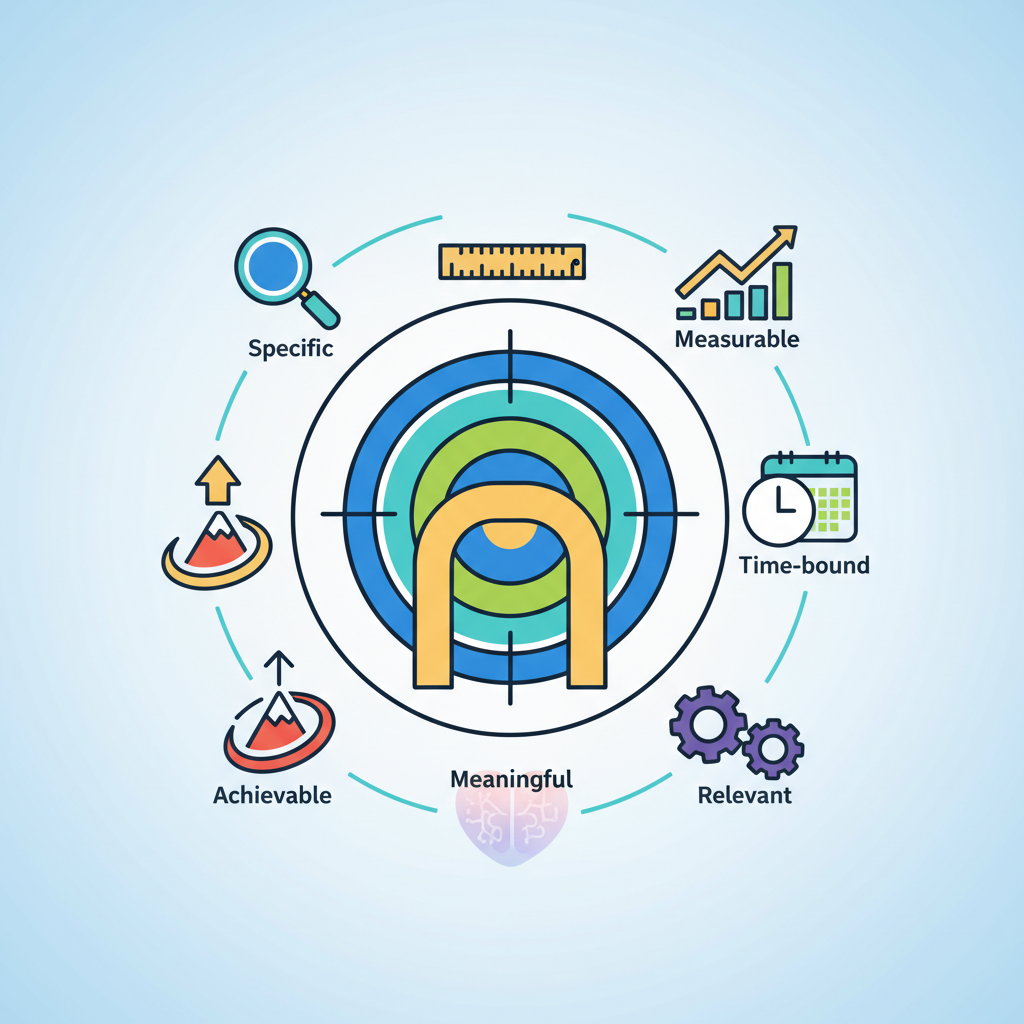
In 2026, as we continue to adapt to a rapidly changing world, the ability to set and achieve meaningful goals is more crucial than ever. It’s not just about ticking boxes; it’s about building a life that resonates with who we are and who we aspire to become. This article will guide you through the process of crafting goals that are not only SMART (Specific, Measurable, Achievable, Relevant, Time-bound) but also deeply meaningful, ensuring they fuel your journey toward personal and professional growth. We’ll explore how to inject clarity, track progress, ensure feasibility, connect goals to your personal ethos, and understand the driving force behind your ambitions.
The Foundation: Why Well-Defined Goals Matter
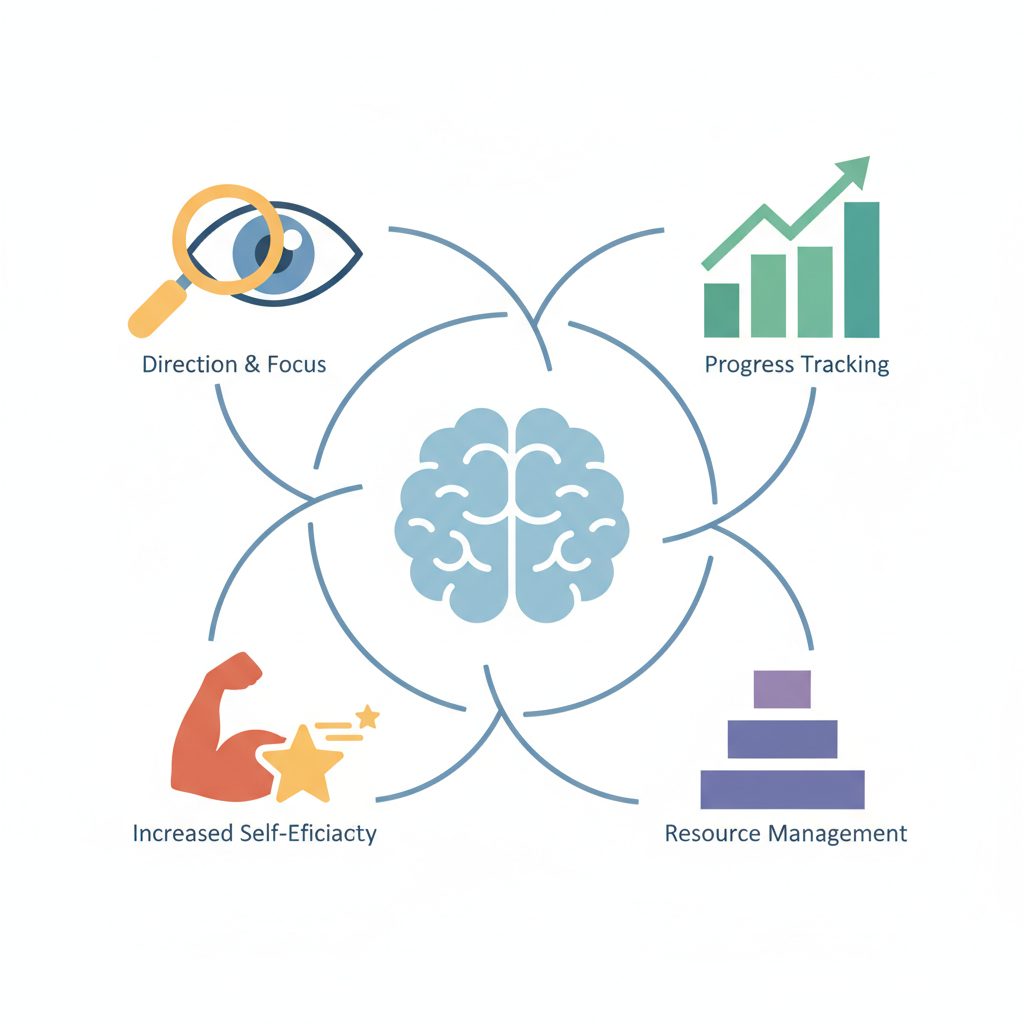
Before diving into the “how,” let’s solidify the “why.” Setting goals provides direction and purpose. Without them, we’re like ships adrift at sea, subject to the whims of the currents rather than charting our own course. Goals act as our compass and our map, guiding our decisions and actions.
- Direction and Focus: Goals help us prioritize what’s important. In a world saturated with distractions, knowing what you’re working towards allows you to filter out noise and concentrate your energy effectively.
- Motivation and Engagement: When you have a clear target, you’re more likely to stay motivated. The act of working towards something you desire creates a sense of purpose and accomplishment, even before you reach the final destination.
- Progress Tracking and Assessment: Goals provide benchmarks against which you can measure your progress. This allows you to see how far you’ve come, identify areas where you might be falling short, and make necessary adjustments.
- Increased Self-Efficacy: Successfully achieving goals, even small ones, builds confidence and a belief in your own capabilities. This sense of confidence standards and self-respect is vital for tackling larger challenges.
- Resource Management: By having clear goals, you can better allocate your time, energy, and resources. You’ll know where to invest your efforts for the greatest impact.
The problem often lies not in the absence of goals, but in the quality of those goals. Vague aspirations like “get fit” or “be happier” are notoriously difficult to act upon. They lack the clarity needed to translate into specific actions. This is where the SMART framework comes in.
Decoding SMART Goals: The Pillars of Specificity, Measurability, and Achievability
The SMART acronym is a widely recognized and highly effective tool for goal setting. Let’s break down each component:
S: Specific
A specific goal answers the “W” questions: Who, What, Where, When, Why, Which.
- Who: Who is involved in achieving this goal? (Often, it’s just you, but sometimes collaboration is key.)
- What: What exactly do you want to accomplish? Be precise. Instead of “eat healthier,” aim for “incorporate one serving of vegetables into my lunch and dinner daily.”
- Where: Where will this goal be achieved? (e.g., at the gym, at home, at work.)
- When: What is the timeframe? (This overlaps with the “T” in SMART, but it’s also relevant here for defining the scope.)
- Why: Why is this goal important? What are the benefits? (This connects to the “Meaningful” aspect we’ll discuss later.)
- Which: Which resources or limits are involved? (e.g., budget, available time, skills.)
Example:
- Vague Goal: “I want to learn a new skill.”
- Specific Goal: “I will complete an online introductory Python programming course by December 31, 2026, to enhance my data analysis capabilities for my current role.”
Specificity removes ambiguity. It provides a clear target that you can aim for, making it easier to plan the steps needed to get there. Without it, you’re essentially trying to hit a target you can’t see.
M: Measurable
How will you know when you’ve achieved your goal? Measurable goals have criteria for tracking progress and determining completion. This involves defining quantifiable metrics.
- How much? (e.g., lose 10 pounds, save $500)
- How many? (e.g., read 12 books, attend 3 workshops)
- How will I know when it is accomplished? (e.g., receive a promotion, complete a project)
Example:
- Non-Measurable Goal: “I want to improve my fitness.”
- Measurable Goal: “I will be able to run 5 kilometers without stopping by June 1, 2026, measured by my pace and distance tracked on my fitness app.”
Measurability is crucial for motivation. Seeing tangible progress, like a number on a scale decreasing or a distance increasing, provides positive reinforcement and helps you stay on track. It also allows you to objectively assess your performance and identify if your current strategy is working.
A: Achievable (or Attainable)
This component ensures that your goal is realistic and within your reach, given your current resources, skills, and circumstances. An unachievable goal can lead to frustration and discouragement.
- Is this goal realistic for me right now? Consider your current commitments, skills, and available resources.
- Do I have the necessary skills or can I acquire them?
- Is the timeframe realistic?
- What potential obstacles might I face, and can I overcome them?
Example:
- Unachievable Goal: “I will become fluent in Mandarin Chinese in three months while working a full-time job and raising two young children.”
- Achievable Goal: “I will dedicate 30 minutes each day to learning basic Mandarin phrases using a language app, aiming to hold a simple conversation about daily topics by the end of 2026.”
Achievability doesn’t mean the goal should be easy. It means it should be possible. Sometimes, achieving a goal requires stretching your capabilities, which is where growth happens. But setting yourself up for failure with an impossible target is counterproductive. It’s important to be honest with yourself about what’s feasible. If a goal feels too big, consider breaking it down into smaller, more manageable steps.
R is for Relevant: Aligning Goals with Your Values and Vision
The “R” in SMART stands for Relevant. This is where we move beyond just setting any goal to setting meaningful goals. A relevant goal is one that matters to you. It aligns with your broader objectives, your values, and your vision for your life.
Why Does Relevance Matter?
- Deeper Motivation: Goals that resonate with your core values and personal mission are inherently more motivating. You’re not just pursuing an external achievement; you’re living in accordance with what you believe is important.
- Personal Fulfillment: When your goals are relevant, achieving them contributes to a sense of purpose and fulfillment. They feel less like obligations and more like steps towards a life you truly want to live.
- Sustained Effort: Inevitably, you’ll face challenges and setbacks. If a goal is deeply relevant, you’ll be more likely to persevere through difficulties because the underlying ‘why’ is strong.
- Holistic Growth: Relevant goals contribute to your overall well-being and personal development, rather than being isolated pursuits that don’t connect to the rest of your life.
How to Ensure Relevance:
- Connect to Your Values: What principles guide your life? Honesty, creativity, compassion, growth, security, contribution? A goal that aligns with these values will feel intrinsically right. For instance, if “personal growth” is a core value, a goal related to learning a new skill or expanding your knowledge is highly relevant.
- Align with Broader Objectives: How does this goal fit into your bigger picture? If your long-term vision is to start your own business, a goal to improve your leadership skills or financial literacy is relevant. If you’re aiming for a healthier lifestyle, a goal to reduce stress is relevant.
- Consider Your Current Life Stage: What is most important to you now? Your priorities might shift over time. A relevant goal acknowledges your current circumstances and aspirations.
- Ask “Why This Goal, Why Now?”: Truly explore the reasons behind your goal. If the answer is simply “because I feel I should” or “everyone else is doing it,” it might not be truly relevant to you.
Example:
- Less Relevant Goal: “I will learn to play the ukulele because my friend is doing it.” (Might be fun, but lacks personal connection.)
- Relevant Goal: “I will learn to play the ukulele by practicing 20 minutes daily, as I believe developing a creative hobby will help me de-stress and express myself more freely, aligning with my value of well-being.”
When your goals are relevant, they become more than just tasks; they become expressions of who you are and who you want to be. This deepens the commitment and makes the journey more rewarding. It’s about ensuring that the goals you pursue are truly your goals, not just ones you feel pressured to adopt.
T is for Time-Bound: Adding Urgency and Structure
The final component of the SMART framework is Time-Bound. This means setting a clear deadline for your goal. Without a deadline, goals can easily be postponed indefinitely.
- What is the deadline? Be specific (e.g., “by the end of the quarter,” “within six months,” “on December 31, 2026”).
- Why is this timeframe important? This helps create a sense of urgency.
- Break it down: For longer-term goals, set intermediate deadlines for milestones. This makes the goal feel less daunting and allows for progress tracking.
Example:
- Non-Time-Bound Goal: “I want to declutter my home.”
- Time-Bound Goal: “I will declutter and organize my garage by July 31, 2026, dedicating two hours every Saturday morning until it’s complete.”
A deadline provides structure and prevents procrastination. It creates a sense of urgency that can be a powerful motivator. Furthermore, intermediate deadlines help you maintain momentum. If you have a large goal, breaking it down into smaller, time-bound steps makes it more manageable and provides regular opportunities for a sense of accomplishment. For instance, if your goal is to run a marathon, you might set weekly mileage targets and a date for completing a 10k race as intermediate steps.
Beyond SMART: Infusing Motivation and Meaning
While the SMART framework provides an excellent structure, true goal achievement often hinges on something deeper: motivation and meaning. A goal can be SMART, yet still feel hollow if it doesn’t tap into your intrinsic drives or connect with your core values.
Understanding Your Motivation: The Engine of Achievement
Motivation isn’t a single entity; it comes in different forms. Understanding your primary drivers can help you sustain effort, especially when things get tough.
- Intrinsic Motivation: This comes from within. You pursue a goal because you find it inherently enjoyable, interesting, or satisfying. Learning a new language because you love the culture, or exercising because it makes you feel energized, are examples of intrinsic motivation. This is often the most powerful and sustainable form of motivation.
- Extrinsic Motivation: This comes from external rewards or pressures. You might pursue a goal to earn money, gain praise, avoid punishment, or meet societal expectations. While extrinsic motivators can be effective, they can sometimes undermine intrinsic interest and are often less sustainable in the long run.
How to Boost Motivation:
- Visualize Success: Imagine yourself achieving the goal and the positive feelings associated with it.
- Celebrate Milestones: Acknowledge and reward yourself for progress, no matter how small. This reinforces positive behavior.
- Find an Accountability Partner: Sharing your goals with someone else can increase your commitment.
- Remind Yourself of the “Why”: Regularly revisit the reasons why the goal is important to you. This is where the relevance component truly shines.
- Embrace the Process: Focus on the journey and the learning, not just the end result. Enjoy the small wins and the challenges that help you grow.
- Connect to a Larger Purpose: If your goal contributes to something bigger than yourself – helping others, making a difference, or contributing to a community – this can be a powerful motivator.
It’s also important to acknowledge that motivation can fluctuate. There will be days when you feel highly driven and days when you struggle. This is normal. The key is to have strategies in place to push through those dips. This might involve revisiting your “why,” breaking down tasks further, or simply reminding yourself that consistency over time is more important than constant high levels of motivation. Sometimes, simply showing up and doing the work, even when you don’t feel like it, is the most important step. This resilience is what often separates those who achieve their goals from those who don’t.
The Power of Meaning: Goals That Resonate
Meaning is deeply personal. What one person finds meaningful, another might not. Meaningful goals are those that feel significant and contribute to a sense of purpose in your life. They often stem from:
- Personal Values: As discussed earlier, aligning goals with your core values is paramount.
- Personal Growth: Goals that challenge you to learn, develop new skills, or overcome obstacles contribute to personal growth and a sense of accomplishment.
- Contribution: Goals that involve helping others, contributing to your community, or making a positive impact can be incredibly meaningful.
- Authenticity: Pursuing goals that are true to yourself, rather than those dictated by external pressures, leads to a greater sense of meaning.
Consider the concept of confidence standards and self respect. When your goals are aligned with your values and contribute to your personal growth, they naturally bolster your self-esteem and sense of self-worth. Achieving something meaningful reinforces your belief in your own capabilities and your place in the world.
Sometimes, even in difficult circumstances, finding meaning can be a powerful source of strength. For example, individuals in recovery often face significant challenges, including feelings of isolation. Setting goals related to rebuilding social connections or engaging in activities that bring joy can be deeply meaningful. As discussed in articles about 23 how to handle loneliness in recovery, setting small, achievable goals can combat feelings of hopelessness and foster a sense of purpose. Similarly, understanding 68 why still standing is more than a phrase highlights the profound meaning found in resilience and the ongoing effort to live a fulfilling life, even after adversity.
Putting It All Together: Crafting Your Personal Goal Blueprint
Let’s walk through an example of crafting a goal that is SMART, meaningful, and motivating.
Scenario: Sarah wants to improve her physical health.
- Initial Vague Goal: “I want to get healthier.”
- Making it SMART:
Specific: Sarah decides to focus on cardiovascular health and strength. Her specific goal is to be able to comfortably walk for 30 minutes three times a week and incorporate bodyweight strength exercises twice a week. Measurable: She will track her walks using a fitness app (duration, distance, perceived exertion) and mark off her strength training sessions on a calendar. Success will be defined as completing these activities consistently for 12 weeks. Achievable: Sarah works part-time and has some flexibility in her schedule. She acknowledges that she’s currently sedentary and will start with shorter walks and fewer repetitions, gradually increasing intensity. She has access to a local park and a quiet space at home. Relevant: Sarah values her long-term health and wants to have more energy to play with her young children. This goal directly supports her desire for a vibrant life and aligns with her value of well-being. * Time-Bound: Sarah sets a deadline of 12 weeks from today, meaning she aims to achieve this consistent routine by mid-September 2026. She also sets intermediate goals: Week 1-4: Walk 15 mins twice a week, 5 bodyweight exercises twice a week. Week 5-8: Walk 20 mins three times a week, 8 bodyweight exercises twice a week. Week 9-12: Walk 30 mins three times a week, 10 bodyweight exercises twice a week.
- Infusing Motivation and Meaning:
Motivation: Sarah knows she’s more likely to stick with it if she enjoys it. She plans to listen to podcasts during her walks and do her strength training while watching her favorite show. She also tells a supportive friend about her goal for accountability. Meaning: Sarah visualizes herself having more energy, feeling stronger, and being able to keep up with her kids during family outings. She understands that this isn’t just about exercise; it’s about investing in her quality of life and her ability to be present for her family. She also recognizes that this journey contributes to her overall confidence standards and self respect.
This refined goal is specific, measurable, achievable, relevant, and time-bound. It’s also deeply connected to Sarah’s personal values and motivations, making it far more likely that she will not only set it but also achieve it.
Overcoming Common Obstacles
Even with the best-laid plans, obstacles can arise. Here are some common challenges and how to address them:
- Procrastination: Break tasks into smaller steps. Use time-blocking techniques. Identify why you’re procrastinating – fear of failure, perfectionism, lack of clarity? Address the root cause. If you’re struggling with procrastination related to social connection, remember resources on 23 how to handle loneliness in recovery 2 can offer valuable insights.
- Lack of Progress: Re-evaluate your plan. Is it still realistic? Do you need to adjust your strategy? Sometimes, a temporary setback doesn’t mean the goal is impossible, just that the current path needs tweaking. Remember the resilience discussed in 68 why still standing is more than a phrase 2.
- Loss of Motivation: Reconnect with your “why.” Visualize success. Celebrate small wins. Seek support from others. Sometimes, a simple reminder of how far you’ve come can reignite your drive. Articles like 23 how to handle loneliness in recovery 3 offer strategies for maintaining momentum even when feeling isolated.
- Unforeseen Circumstances: Life happens. Be flexible and adapt. If a major event derails your progress, don’t abandon the goal entirely. Adjust your timeline or modify the goal to fit your new reality. It might mean temporarily shifting focus, perhaps to something more immediate like 23 how to handle loneliness in recovery 4, before returning to your original objective.
Conclusion: Your Journey, Your Goals
Setting SMART and meaningful goals is not a one-time event; it’s an ongoing process of self-discovery and intentional action. By focusing on specificity, measurability, achievability, relevance, and time-bound objectives, you create a robust framework for success. More importantly, by tapping into your intrinsic motivation and ensuring your goals resonate with your deepest values, you transform them into powerful drivers for personal growth and fulfillment.
In 2026, let’s move beyond vague aspirations and embrace the clarity and purpose that well-crafted goals provide. Whether you’re aiming for career advancement, personal development, improved health, or stronger relationships, the principles outlined here will serve as your guide. Remember that the journey itself is valuable, and every step forward, no matter how small, contributes to the larger picture of the life you are intentionally building. Consider exploring resources like Posters and art to find visual reminders that can inspire your goal-setting journey.
Frequently Asked Questions
What is the most important part of the SMART goal framework?
While all components are crucial, many experts emphasize Relevance (the “R”) as the most critical for long-term success and fulfillment. A goal can be SMART in structure but if it doesn’t align with your values, passions, or broader life vision, you’re less likely to be motivated to pursue it, especially when challenges arise. A goal that truly matters to you provides the underlying “why” that fuels perseverance.
Can a goal be both SMART and inspiring?
Absolutely! The SMART framework provides the structure, while the “meaningful” aspect – connecting to values, passions, and a sense of purpose – provides the inspiration. A well-crafted goal should ideally be both practical and aspirational. It should stretch you while also feeling deeply aligned with who you are and who you want to become.
How often should I review my goals?
It’s recommended to review your goals regularly. A weekly check-in can help you stay on track with immediate tasks, while a monthly or quarterly review allows you to assess progress towards larger objectives, identify any necessary adjustments, and reaffirm your commitment. Major life changes might warrant a more significant review of your entire goal set.
What if I don’t know my core values?
Identifying your core values is a journey. Reflect on times when you felt most proud, fulfilled, or energized. What principles were you honoring? Consider what qualities you admire in others or what you believe is most important in life. There are many online exercises and questionnaires designed to help you identify your core values. Once identified, you can start aligning your goals with them.
Is it okay to adjust a goal once I’ve set it?
Yes, it is not only okay, but often necessary! Life is dynamic. Circumstances change, priorities shift, and you gain new insights. If a goal is no longer realistic, relevant, or motivating, it’s wise to adjust it. The goal is to move forward in a way that serves you, not to rigidly adhere to a plan that no longer fits. Flexibility is a key component of successful goal achievement.
How can I make my goals more achievable if they seem too big?
The best strategy is to break them down. Divide your large goal into smaller, more manageable sub-goals or milestones. This makes the overall objective seem less daunting and provides opportunities for frequent successes, which can boost motivation and confidence. For example, if your goal is to write a book, start with outlining chapters, then writing a certain number of words per day, then revising a chapter.
Key Takeaways
- Clarity is Key: Vague goals lead to vague results. Use the SMART framework (Specific, Measurable, Achievable, Relevant, Time-bound) to create clear objectives.
- Relevance Fuels Motivation: Ensure your goals align with your core values and personal vision for a deeper, more sustainable drive.
- Motivation Fluctuates: Understand the difference between intrinsic and extrinsic motivation. Develop strategies to push through low-motivation periods.
- Break It Down: Large goals are more manageable when divided into smaller, actionable steps with intermediate deadlines.
- Regular Review: Periodically assess your progress, celebrate milestones, and be willing to adjust your goals as needed.
- Meaning Matters: Goals that contribute to personal growth, purpose, or contribution are often the most fulfilling.
- Resilience is Crucial: Obstacles are part of the process. Learn to adapt, persevere, and learn from setbacks.
This opinions posed in this article ae just that, mine. This article is for informational purposes only.